
Darren Hails runs the rule over a quiet-looking Vikings week that still left plenty to work through before OTAs: the GM search moving into interviews, the 2028 draft heading to Minneapolis, the rookie class getting signed, Ravens joint practices landing on the calendar, early Kyler Murray locker-room signals and a defense that suddenly feels short on margin.
The strange thing about this time of year is that things look quiet until you start putting them together.
Nothing this week jumps out on its own: a shortlist here, a rookie contract there, a future draft announcement, a joint-practice date and a couple of soft quotes before OTAs.
It is not exactly the sort of week that makes people jump out of their seats, but this is also where the offseason quietly changes gear.
This week’s Skol Scroll looks back at the news from Wednesday, May 13 to Wednesday, May 20. The draft is done, the schedule is out, OTAs don’t begin until next Tuesday. In theory, this should be a chill-out week.
In reality, the Vikings have left us clues. Little markers one can use to work out where the real questions are going next. And there are a few worth pulling out before everyone starts getting overexcited about fifth-string wide receivers in OTAs.
The GM search has left the spreadsheet stage
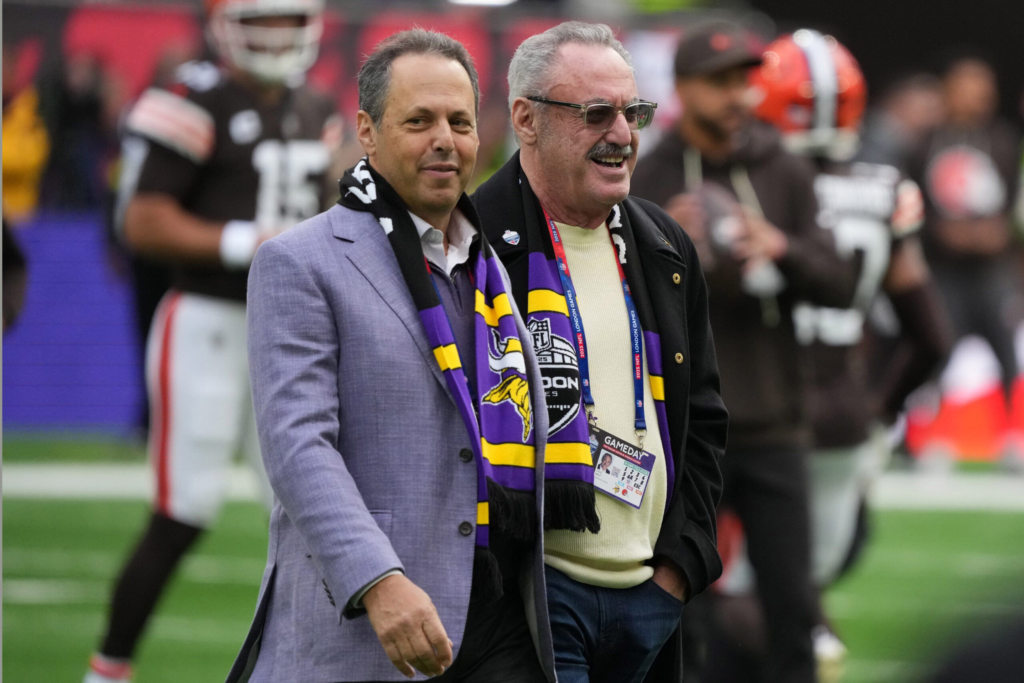
For a while, the Vikings’ general manager search was mostly a names exercise. You could make the candidate list, argue for your favourite, talk yourself into a personnel tree, talk yourself out of it again, and then end up back at Rob Brzezinski because that is where every Vikings front-office conversation seems to end up.
This week, the rubber started to hit the road.
NFL.com reported that the Vikings have scheduled face-to-face interviews with Brzezinski, Reed Burckhardt, Terrance Gray, John McKay, and Nolan Teasley for next week. That does not mean every other name is definitely out, but it does give us the clearest working group yet.
The most interesting part is Brzezinski. Not because he is automatically the favourite, and not because continuity is always the right answer, but because he now looks like the yardstick.
If you are Burckhardt, Gray, McKay, or Teasley, you are not just trying to prove you are qualified. You are trying to prove you offer something the Vikings cannot already get from the person who has been in the building, knows the contracts, helped steady the draft process, and understands how Kevin O’Connell and Brian Flores want this roster to work.
That is a harder test than simply being a respected personnel executive.
The timing also matters. This is not a normal GM hiring cycle. The draft has already happened. Free agency has already happened. The next GM is not walking in with a blank sheet and a full offseason to shape. He is walking into a team that already has its 2026 plan largely built, and his first real job may be to sharpen the process before the next big set of decisions.
So the next stage is not just about who gives the best interview. It is about whether any external candidate can beat the internal option on actual added value.
The 2028 NFL draft is a big signal, not a football fix
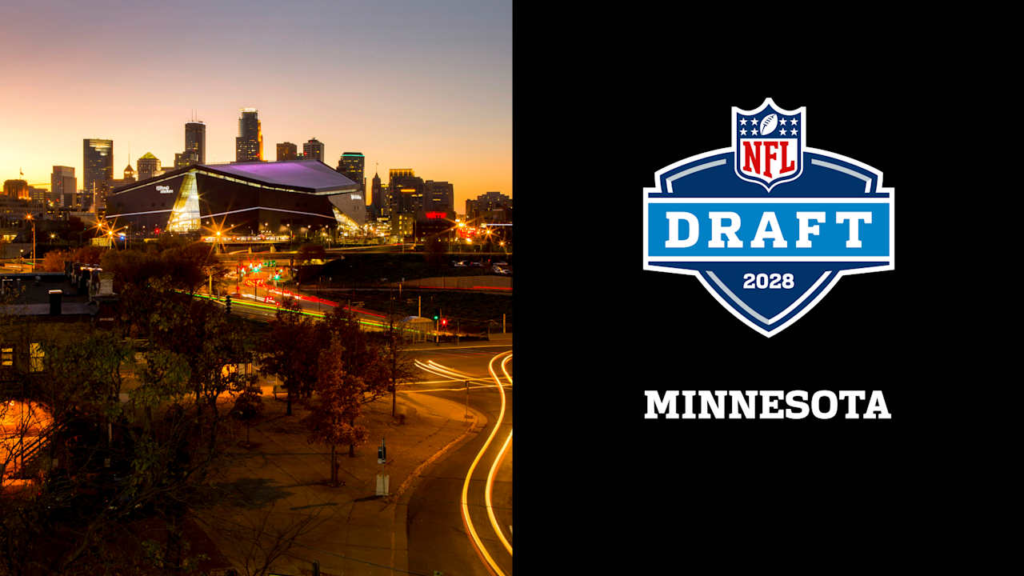
The NFL officially awarded the 2028 draft to Minneapolis this week, which is a brilliant bit of news for the city and for the Vikings as an organisation. It doesn’t move the needle on the 2026 team. Nobody blocks better against Green Bay because Roger Goodell will eventually stand somewhere near U.S. Bank Stadium and get booed in a different zipcode.
The league has taken the draft to Detroit, Green Bay, Pittsburgh, and next Washington, D.C., before Minnesota gets its turn in 2028. So this isn’t about the NFL suddenly discovering cold-weather or northern markets. It’s about Minnesota being trusted with another major event after hosting Super Bowl LII and years of pushing for the draft.
That’s the part worth keeping. The Vikings want to be seen as more than just a team with a nice stadium. They want to be part of a city and region the league trusts with big moments. That doesn’t win games, but it does feed the wider standing of the franchise.
For UK and Ireland fans, I wouldn’t pretend this means everyone is suddenly booking flights for April 2028. That would be a stretch. But for anyone who’s already thought about doing a Vikings trip one day, the draft now sits there as another possible football event around Minnesota. Not a must-do, just something to keep in the back of the mind.
The football side is simpler: there isn’t much of one yet. This is a civic and franchise win more than a roster story. And that’s fine. Not everything has to become a quarterback debate, no matter how hard the offseason tries.
Jake Golday turns the rookie class into a timetable
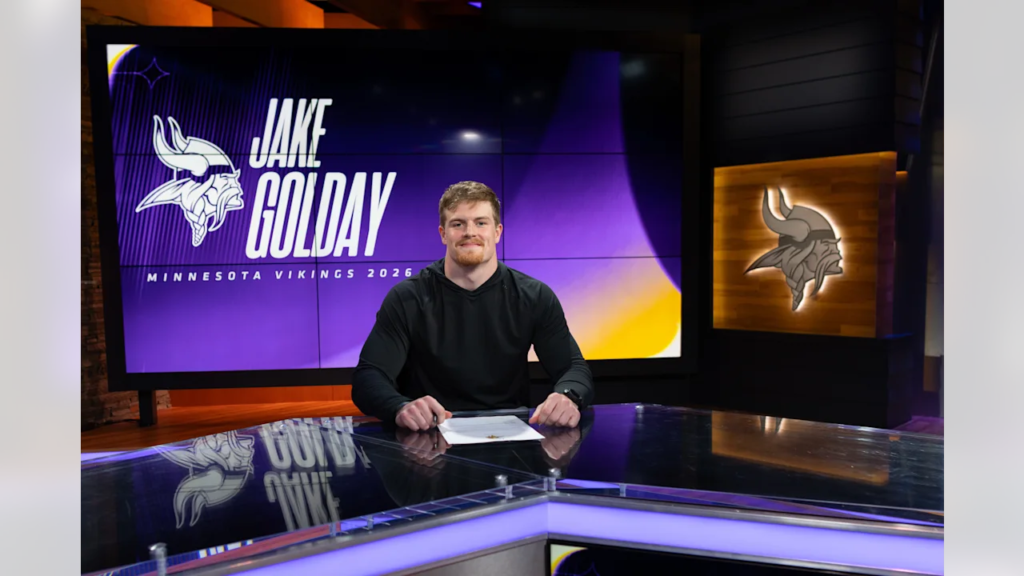
Jake Golday signed his rookie contract this week, which means all nine Vikings draft picks are now under contract.
It’s not a fireworks story, unless your idea of a big evening is reading rookie contract updates, in which case, fair play, but I am not sure I can help you.
What it does is remove the last bit of admin from the rookie class. No lingering “when does Golday sign?” line at the bottom of every update. No contract subplot heading into OTAs. Just nine draft picks on the football clock.
For Golday, that clock is especially interesting because his first job may tell us how patient the Vikings want to be. He has defensive-end background, linebacker athleticism and the kind of overhang/blitz/coverage flexibility Brian Flores tends to enjoy. In the long term, you can imagine a wider role; short term, the staff may need to give him one home before asking him to do five things at once.
Golday clearly isn’t the answer to the post-Jonathan Greenard edge question. That doesn’t mean he can’t be useful, it just means his usefulness probably comes in a different way: pressure looks, coverage drops, simulated-pressure packages and those pre-snap Flores pictures that make quarterbacks wonder if they’ve opened the wrong exam paper.
The big rookie questions are still Caleb Banks’ health, Domonique Orange’s early-down role, Jakobe Thomas in the safety picture, Demond Claiborne’s speed and pass protection and whether any day-three player forces an early job. Golday signing doesn’t answer any of that, but it means the questions can finally move onto the field.
Ravens practices might matter more than the preseason game
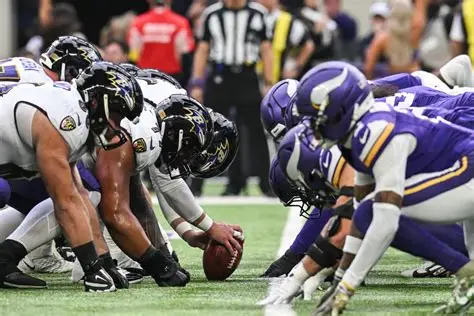
The Vikings announced that the Ravens will come to TCO Performance Center for joint practices on Wednesday, August 19, and Thursday, August 20. The teams then play at U.S. Bank Stadium on Saturday, August 22, in Minnesota’s only home preseason game.
For fans over here, that game is actually civilised for once. Noon in Minneapolis is 6pm in the UK and Ireland. A Vikings game that doesn’t require caffeine, regret and a workplace apology the next morning. Treasure it.
But the real value is probably in the practices.
Under Kevin O’Connell, joint practices have often told us more than preseason games. The starters can get controlled, competitive work without the full chaos of a live exhibition. Coaches can script situations. Quarterbacks can see different coverage looks. Linemen can get proper reps. Bubble players can be tested against someone who doesn’t already know every tendency from the practice field.
If Kyler Murray and J. J. McCarthy are still competing by then, those practices could become one of the most useful checkpoints of the summer. Not because one throw in August decides QB1 – it doesn’t – but because a controlled practice against a strong opponent can show command, timing, operation and how quickly a quarterback gets the ball to the right place when the picture changes.
It matters for Caleb Banks too. If he’s fully back from the foot issue, the Ravens week is a much better test than spring optimism. It matters for Dallas Turner, who’s being asked to grow into a much bigger role after the Greenard trade. It matters for the young defensive front, the corner depth and every receiver trying to prove he’s more than a camp name.
Preseason games can lie to you. Joint practices usually tell you a bit more.
Kyler Murray’s first useful update was not a throw
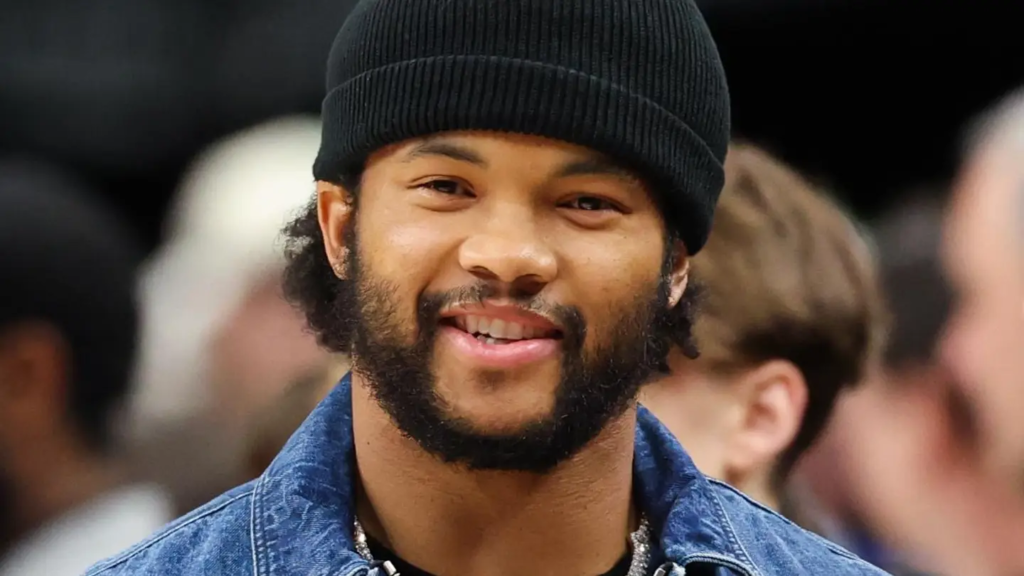
The useful Kyler Murray note this week was almost aggressively non-football. No deep ball clip. No sweating in a gym. No grainy practice video that people slow down like they’re investigating a crime scene.
Just Blake Cashman saying Murray has been engaged in the building and has made an effort to spend time with teammates, including going with the group to a Minnesota Wild playoff game.
That’s easy to wave away, because nobody wins a job by being pleasant at a hockey game, but Murray’s first challenge in Minnesota was never just learning Kevin O’Connell’s call sheet. He also had to walk into a locker room where J. J. McCarthy still has support, where players lived through the mess of 2025 and where the new quarterback can’t simply assume the room becomes his because the talent says it should.
Murray arrived with old questions attached to him: leadership, preparation, how he fits into a locker room, whether he can become the voice of an offense rather than just a very talented player in it. Some of that criticism may have been fair, some of it may have been lazy. Usually it’s a bit of both.
So no, this doesn’t settle the QB1 competition one bit. It just suggests Murray knows the human bit of the job has already started.
The defense has a new centre of gravity
One of the more revealing bits of the week was not an official team announcement, it was the way people are starting to talk about the Vikings defense.
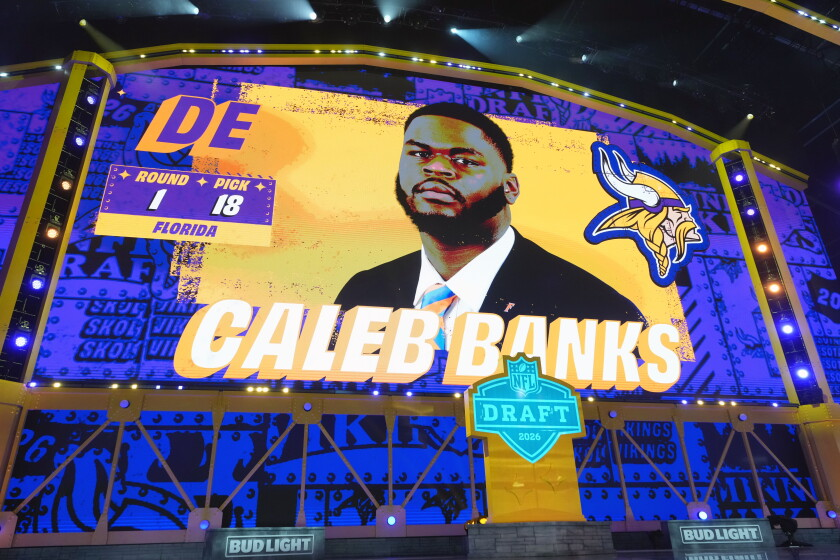
The top names now look different: Andrew Van Ginkel, Blake Cashman, Jalen Redmond, Byron Murphy Jr., Josh Metellus, Dallas Turner waiting to prove he belongs, Caleb Banks and Domonique Orange arriving as rookies with clear jobs but no NFL evidence yet, and Harrison Smith still sitting there as a major unresolved summer question.
That’s a different feeling from a defense led by Jonathan Greenard. Jonathan Allen leaving is part of the overall churn, but I wouldn’t overstate that one. He underperformed last year, so his absence doesn’t feel like the same kind of loss. Greenard is the one that really changes the pressure equation.
The Vikings still have good players. Van Ginkel might be the perfect Flores defender because he can rush, drop, read screens and make quarterbacks second-guess simple answers. Cashman is the communicator. Redmond is becoming more than a nice story. Murphy is still the best corner. Metellus remains one of the most useful pieces in the chessboard part of the defense.
But the star power is thinner. The Vikings are betting on structure, development and role clarity. They’re betting that Turner can make a leap, that Banks’ medical risk pays off, that Orange can do the dirty interior work early and that Flores can make the group add up to more than it looks like on paper.
Maybe that works. Flores has earned some trust there.
But the conversation has moved beyond simply naming veteran edge rushers. The bigger question is whether enough players can grow into the right jobs at the same time.
If Turner becomes a proper lead rusher, Van Ginkel can stay in his most awkward, useful version. If Redmond holds his 2025 level, Banks and Orange don’t have to carry the interior alone. If Metellus is used properly, the safety room can survive uncertainty around Harrison Smith. If one of those bits slips, Flores has to patch the picture before the ball is even snapped.
This defense might still be good. It just has less margin for passengers.
The Brian Flores lawsuit story needs a calm read
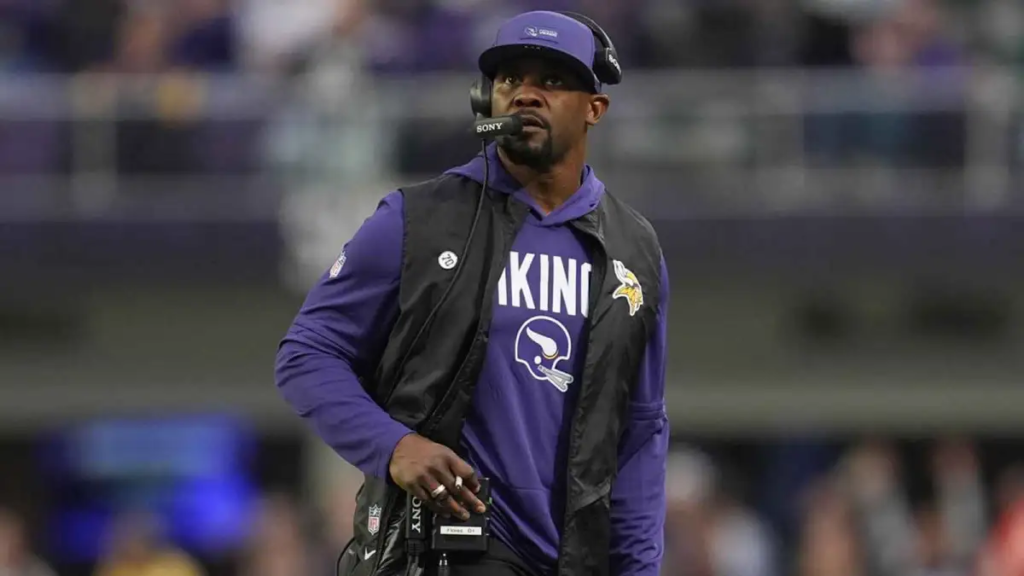
The Athletic reported this week on the latest procedural fight in Brian Flores’ discrimination lawsuit against the NFL and multiple teams, including a dispute over broad document requests and subpoenas tied to hiring and employment records.
That’s not a throwaway offseason headline. Flores’ case is about major issues around hiring, race, access and how the league handles opportunity. It deserves more care than the usual “is this a distraction?” rubbish that tends to appear whenever a legal story touches football.
The useful point for this week is simple: this is still moving through process. There are arguments over documents, scope, timing and what the defendants should have to produce. That can sound dry, but it’s often where cases like this are fought long before anyone gets near the more dramatic bits people imagine.
For Vikings purposes, the football fact hasn’t changed. Flores remains the defensive coordinator, Minnesota extended him earlier this year and his work is still central to how believable this 2026 defense can be.
The Shaleak Knotts move is about jobs
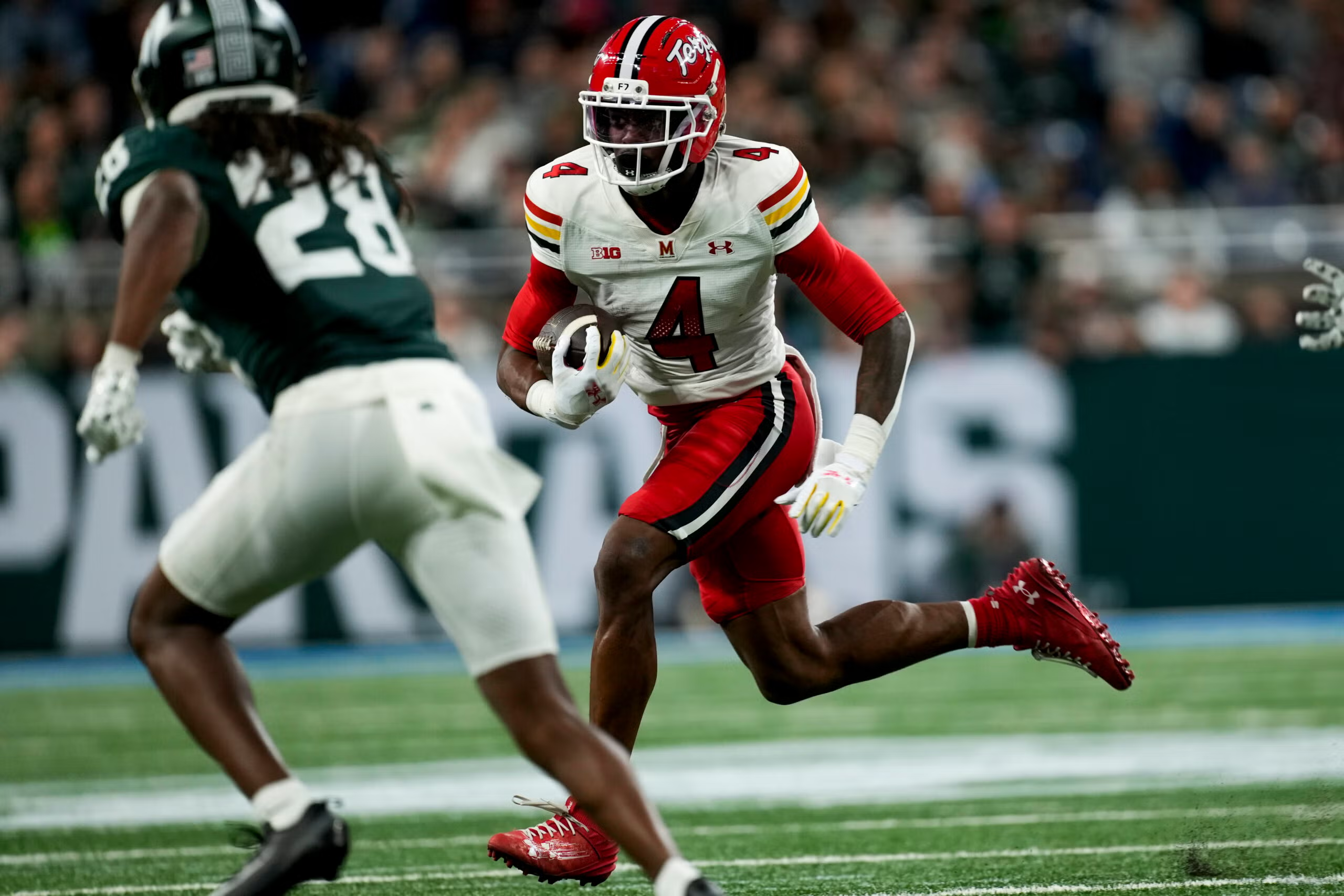
The Vikings also kept trimming and moving around the bottom of the roster this week, including moving on from young receiver Shaleak Knotts after a short stay.
That’s not a judgment on the entire receiver room. It’s not even much of a judgment on Knotts, really. This is the time of year when teams cycle through the bottom of the roster looking for players who can do specific jobs, and that’s the key bit here.
The top of the receiver room feels much clearer with Justin Jefferson, Jordan Addison and Jauan Jennings. After that, Tai Felton, Myles Price, Dillon Bell, Terrill Davis and the rest are not just fighting to be “another receiver.” That’s too vague. Someone has to return kicks. Someone has to cover kicks. Someone has to block. Someone has to be trusted if Addison misses a series or Jennings is needed inside. Someone has to make the active gameday maths work, and that’s where summer gets brutal.
Roster projections love clean columns. Real rosters are messier. The fifth receiver might be there because he returns punts. The last linebacker might be there because the special teams coach trusts him. The punter decision might really be a Will Reichard holding decision. The QB3 question might be less about romance and more about who Kevin O’Connell can actually activate on a bad Sunday.
That’s why a tiny receiver move belongs in the Scroll. It’s not the move itself. It’s the reminder that the Vikings are already sorting jobs, not just names.
The Scroll for this week
The main thing I took from this week is that the offseason is about to become less theoretical. We are moving from lists, rumours and paper arguments into the bit where people actually have to stand in rooms, take reps, learn jobs and show whether the plan makes sense.
That doesn’t mean we’re about to get big answers. We probably aren’t. May and June football can make idiots of of us all if we let it.
But the next set of questions is clearer now, and that’s what this week gave us.