
Darren Hails looks back at the Vikings stories from Wednesday, 20 May to Wednesday, 27 May 2026, digging under the obvious OTA headlines for the bits that might tell us more about Jauan Jennings, the offensive line, Brian Flores’ defense, Harrison Smith’s silence, the quarterback room and the roster arguments starting to creep into view.
There’s something slightly ridiculous about the first open OTA practice, and we all know what it is: shorts, no pads, carefully edited clips, coaches saying sensible things, players toeing the line (mostly) in interviews and half the internet zooming in on quarterback footwork as if it’s the crucial evidence in a court case. I watched it too, obviously, so this isn’t me claiming some higher moral ground from the sofa or anything. I’m just as guilty as anyone when a clip of a quarterback rolling right appears on my timeline.
Even so, this week’s Scroll can’t be another attempt to crown a May winner from a practice that was never meant to give us one. The quarterback conversation hoovers up everything around it, especially now with Kyler Murray and J. J. McCarthy on the same practice field, but the more useful material from this week was sitting beneath all that noise. OTAs began, the GM search trickles along, Brian Flores’ lawsuit had a significant legal update and the roster started to show where the proper summer arguments might happen.
So I’m focusing on the smaller stories, without exaggerating their importance. There’s no reward for rushing to say the offense is fixed, the defense is struggling, or the quarterback competition is settled. But watching what doesn’t make headlines is useful, since that’s often where the next questions start.
OTAs were useful because they stayed boring
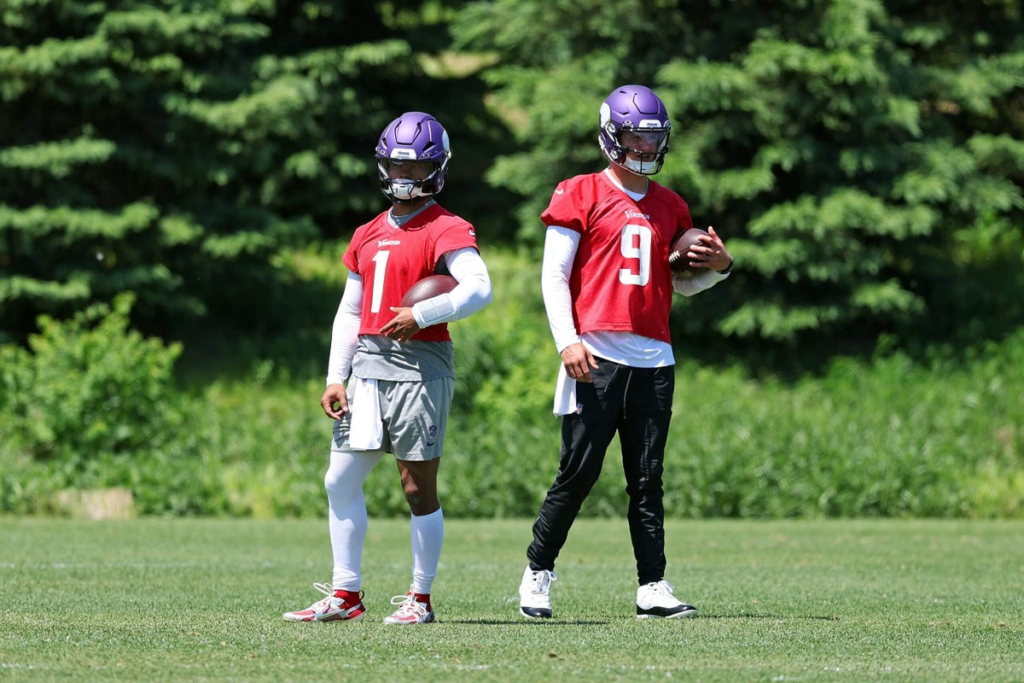
The first media-open OTA practice gave us the classic May update: Murray and McCarthy both took snaps with the first team, both made some good plays, and both missed some throws. Everyone gets a screenshot, but no one gets a real depth chart, and we all act like we learned more than we actually did.
What I appreciated was how the Vikings focused on making the day productive instead of putting on a show. Both quarterbacks got real first-team reps, the practice kept moving and they avoided turning it into a public competition. Minnesota doesn’t need to pick a winner yet; they need a solid process through the summer. It’s less exciting, but it’s the smart approach.
Murray needs to pick up Kevin O’Connell’s system fast enough to let his talent shine in the offense. McCarthy, meanwhile, has to show that last year’s struggles don’t define him. The coaches need to give both players enough chances to make a fair decision without turning every snap into a big debate. That’s easier said than done, which is why the calm approach to the first open practice was more helpful than any one throw.
Murray and McCarthy gave us their homework
The post-practice interviews probably told us more than the video clips, even if most people would rather watch a great throw. Murray talked about how much he has to learn in the offense and getting comfortable with it, which is his main task right now. Everyone knows he can make plays; the real question is whether he can do his best work within O’Connell’s system often enough to keep the offense running smoothly.
That means he needs to get the play call, break the huddle, read the defense, trust his throw and then use his unique skills when the play breaks down, in that order! If he scrambles before following the structure, the Vikings are depending on improvisation again, which works until it doesn’t.
McCarthy’s focus is different: mechanics, processing, decision-making and ball placement. It’s not flashy, but it’s more telling and exactly what he needs to work on this summer. He doesn’t need hype; he needs better habits, steadier vision, improved footwork, easier completions and fewer risky throws that make everyone hold their breath.
People will keep framing the debate as Murray’s reliability versus McCarthy’s potential, and there’s some truth to that, but this week made things feel simpler. Murray is working to learn the system quickly so it doesn’t hold him back, while McCarthy is trying to clean up his game to make the rookie-contract plan realistic again. That’s what this summer is really about, no matter how it’s presented.
Jennings has moved from signing to fit
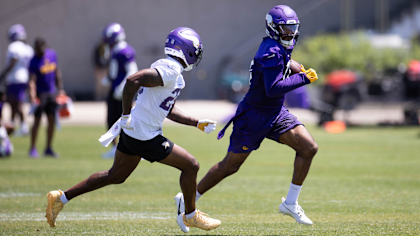
Jauan Jennings as a signing isn’t new anymore. The Vikings brought him in, people talked about the WR3 issue, and we’ve already discussed his size, blocking, contested catches and role in the run game. This week is different because he’s now actually with the team, turning him from just an idea into a real football fit.
Jennings mentioned the talent around him and compared joining the receiver group to Kevin Durant joining the Warriors. Maybe that’s a stretch, but if you walk into a room with Justin Jefferson and Jordan Addison, it’s easy to get excited. Let him enjoy his basketball reference – there are worse things than a new receiver being enthusiastic about his teammates.
Now the question is how soon Jennings can contribute, not just look good on paper. If he can win underneath and through contact, both quarterbacks will have easier options. If he blocks well, the Vikings can run the ball without giving away their plans. If he’s a threat in the red zone, Hockenson and Addison will have new opportunities, and if the coaches trust him by training camp, players like Tai Felton, Myles Price and Dillon Bell can compete for real roles instead of just filling gaps.
Jennings doesn’t have to be a high-volume star. He just needs to make the offense feel more stable, which might not look flashy but could be much more valuable when the season gets tougher.
The offensive line notes deserved more attention
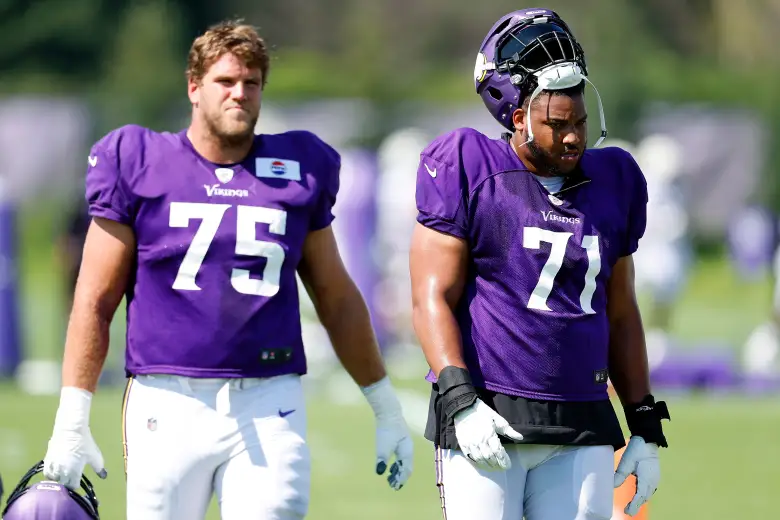
Quarterback highlights are fun, but notes about offensive line drills usually aren’t – unless you’re really into that stuff. Still, the less exciting details might be where the Vikings’ season actually starts to come together.
Vikings.com’s OTA notes covered a lot about Keith Carter’s work with the offensive line: urgency, pad level, cadence, footwork and hand placement. Donovan Jackson also mentioned improving first-step power in the run game and fixing pass protection landmarks. No one’s making a highlight reel out of landmarks, but I’d respect anyone who tried.
The Vikings’ offensive plan relies on the line becoming more consistent. Murray’s mobility can’t be the backup plan on every play. If McCarthy is going to develop, he can’t be stuck in second-and-long all the time. The run game won’t get better just because Frank Smith is here and everyone’s excited about the “pistol” formation like it’s a new gadget.
The offensive line needs to do the basics better: start cleanly, take better angles, communicate well and support a run game that doesn’t leave Aaron Jones and Jordan Mason doing all the heavy lifting. The passing plays will get the spotlight, but the line will determine how much of the offensive plan actually works come September.
Max Bredeson is a small tell for the offence
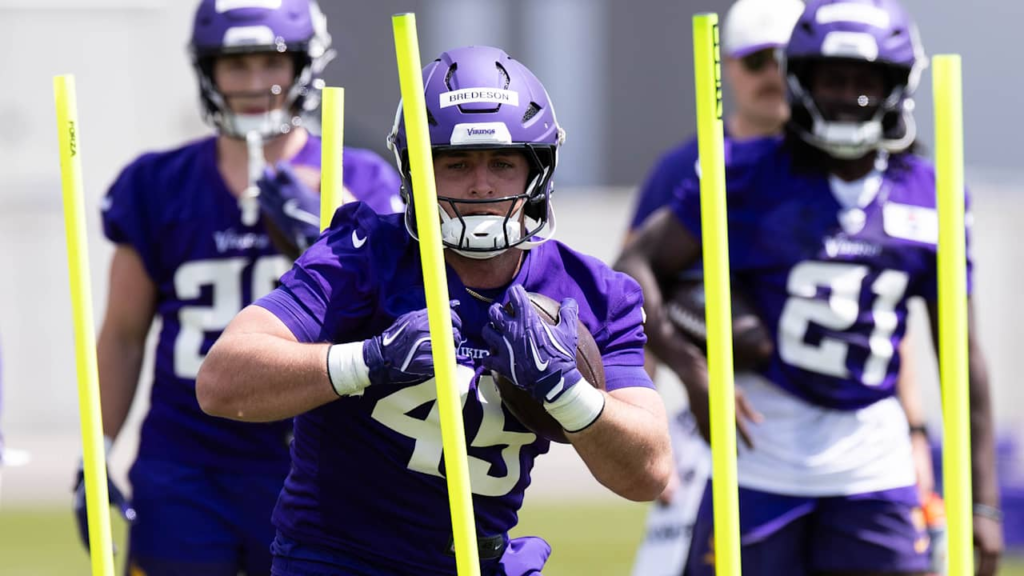
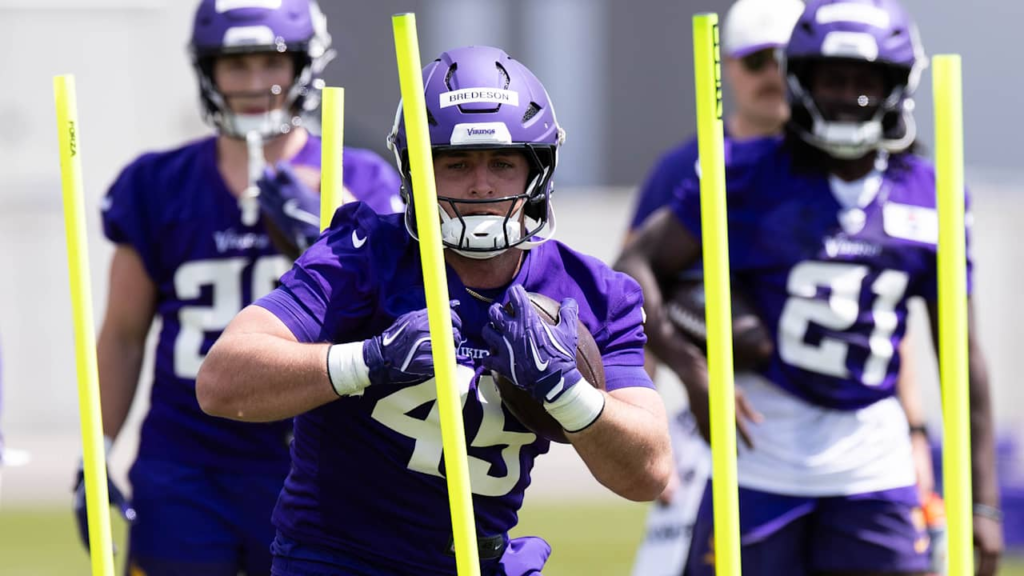
Max Bredeson’s story is easy to overlook: he’s a fifth-round pick, a former Michigan walk-on, has a brother in Tampa Bay and might replace C. J. Ham. It’s a nice story and easy to skip over, but I like keeping these details in the Scroll because fullbacks only get interesting when the offense has bigger plans than just having a big guy stand near the quarterback.
Bredeson might just play special teams and fill in for heavy formations, and that’s fine, but if the Vikings really want to change up their run game, he could be a key piece: lining up as an H-back, making insert blocks, moving in motion or creating two-back looks. Small formation changes can make linebackers hesitate, and at NFL speed, one wrong step can turn a run into a big gain – or a mess.
This ties back to both quarterbacks. Murray might lead the Vikings to use more shotgun, pistol and movement, while McCarthy may need more structure if he’s the starter. Either way, the offense can’t just rely on Jefferson with a weak run game. Bredeson probably won’t be a headline every week – unless something goes really well or really badly – but he’s a good player to watch if you want to see whether the Vikings are truly changing their offense or just swapping out names.
The running back room still feels slightly unfinished
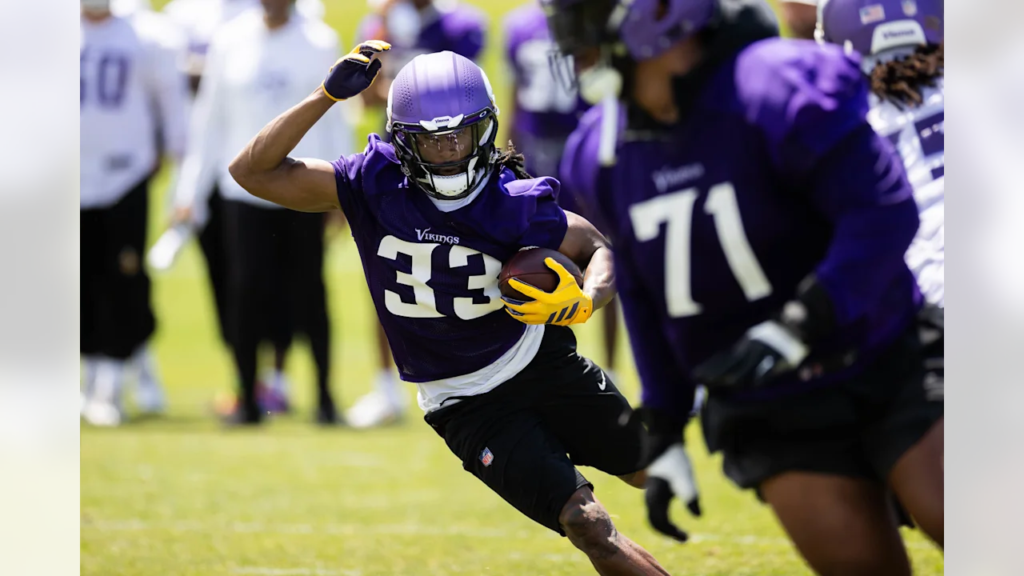
Aaron Jones is still the reliable veteran, Jordan Mason brings a different style and Demond Claiborne has the speed and return skills that get people excited. It’s a solid group for now, but I’m more interested in how they’ll support whichever quarterback wins the job than in debating whether Jones or Mason will be the lead back on the depth chart.
If Murray is the starter, the run game should use his mobility without changing the offense completely. If McCarthy starts, the run game needs to keep him from having to handle every tough situation alone. Both scenarios need a real plan, not just saying “we like our backs”.
Claiborne is exciting, but the real issue is pass protection. Mason can contribute if his role is clear. Jones can still do a lot, but the Vikings can’t just assume age and workload won’t catch up to him. There’s reason to be hopeful, but also reason to keep asking questions, which seems fitting for the end of May.
Hockenson is still the middle of all this
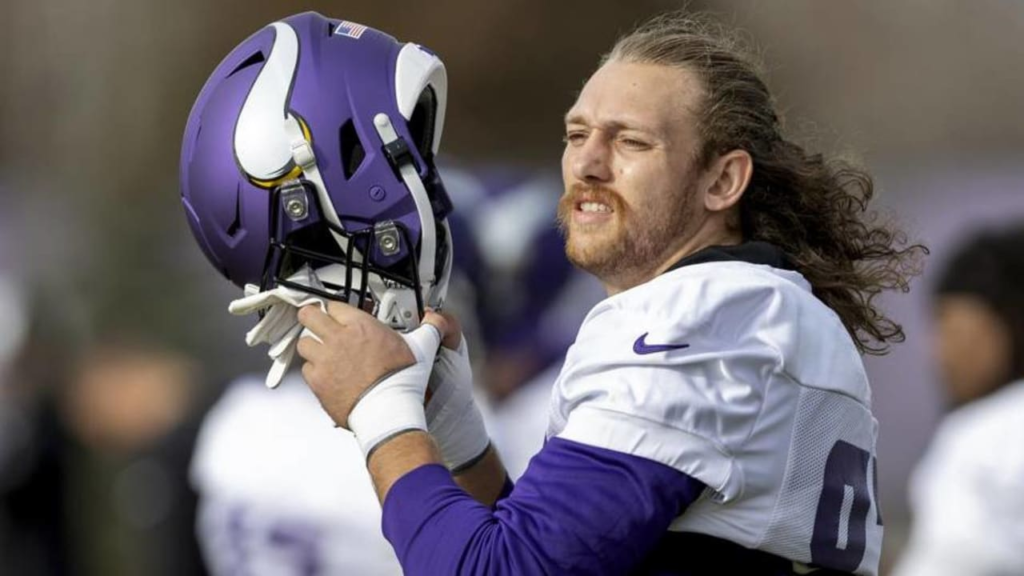
Jennings is new, so he gets the spotlight. Jefferson is always a focus. Addison is often discussed for his role, contract or future. But in the middle of all this is T.J. Hockenson, and I don’t think his 2026 season is getting enough attention.
If Hockenson is healthy and playing well, the offense has a real option in the middle of the field. Murray gets a safer choice when things get messy, McCarthy gets an easier throw to stay on track and Jennings can focus on his strengths without carrying the whole short game. Hockenson might not be the star, but he could be the one who holds the offense together.
If Hockenson is just average, the passing game quickly gets weaker. Defenses can focus more on the receivers, third downs get tougher and the starting quarterback has fewer easy options. It’s not a big story yet, but it matters – Hockenson could be the key to making all the offensive pieces work together.
Loudermilk is a clue, not a cure
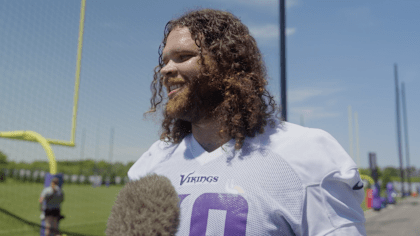
The Vikings signed Isaiahh Loudermilk on Thursday, 21 May, which is exactly the sort of move normal people can ignore and the rest of us can spend too long pretending is loaded with meaning. He’s a veteran defensive lineman with 60 regular-season games, seven starts and previous Brian Flores overlap in Pittsburgh. Long body, some flexibility and enough experience to compete in a defensive-line room that’s changed a lot.
He isn’t the Jonathan Greenard replacement, so let’s clear that up before anyone thinks a 6-foot-7 defensive lineman has fixed the edge group. What matters more is what he shows about the kind of players Flores wants: length, front flexibility, familiarity and guys who can line up in tough spots without ruining the disguise.
Caleb Banks and Domonique Orange are the big rookie bets. Jalen Redmond is the returning interior player who now has to show that 2025 wasn’t just a one-year thing. Loudermilk is another piece to help make the front more stable, and while that’s not exciting, defensive fronts are often built from these smaller roles: early downs, rotation and holding up well enough to let better players shine. That seems to be his role for now.
Dallas Turner has moved past being a sleeper
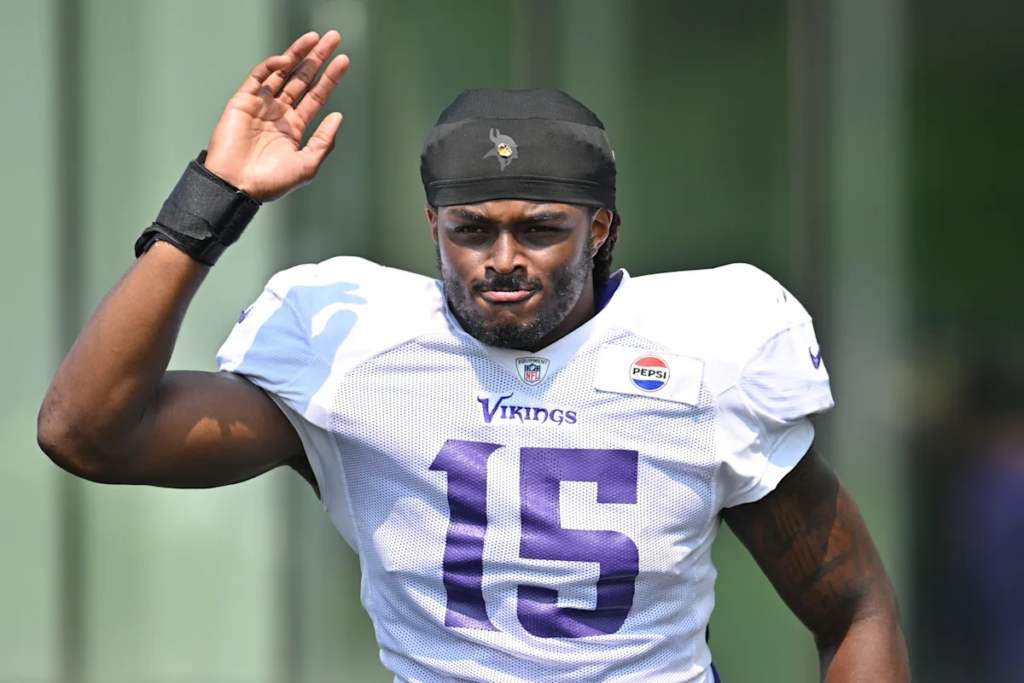
Dallas Turner keeps coming up in breakout and underrated player talks, which is good for him and a bit nerve-wracking for the Vikings. His breakout isn’t just a bonus anymore. After the Greenard trade, Turner becoming a true front-line edge is now a key part of the defensive plan.
If he gets there, the front makes sense. Andrew Van Ginkel can stay in the odd, useful Flores role rather than carrying too much straight edge-rush burden, the rookie defensive tackles get a cleaner runway, and the secondary gets helped by the ball coming out faster. If Turner doesn’t get there, the whole conversation changes into something much less comfortable.
Then we’re asking if the Vikings relied too much on development, if they need a veteran before camp and if Flores can work around a lack of pressure without hurting something else. Turner can still be young and learning, but Minnesota has set things up so he needs to grow up fast. It’s a lot to ask, but that’s just how the roster is right now.
Harrison Smith’s silence is moving other people around
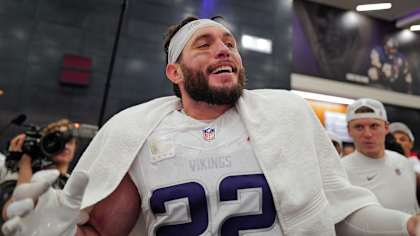
Harrison Smith’s future is still up in the air, and it’s easy to see it as a simple yes-or-no question. Is he coming back, is he retiring, and when will we know? Those are fair questions, but the football side is more complicated than just the timing.
If Smith isn’t there, or if the Vikings have to plan as if he might not be, everyone else in the safety group gets a slightly different job. Josh Metellus is the obvious name, but I don’t think Minnesota wants him to become too traditional. His value is in his versatility: box, nickel, pressure, coverage, disguise and all the tricky Flores schemes that make quarterbacks pause. If you make him too much of a standard safety, you lose what makes him special.
That puts more focus on the younger safeties. Theo Jackson, Jay Ward, Jakobe Thomas, and even Jacob Thomas as a deeper camp name, all come into play. None of them has to become Harrison Smith, thank god, because that would be way too much to ask. The real question is whether enough of them can handle the smaller roles so Metellus can keep doing what he does best. Smith’s decision seems like it affects one roster spot, but it probably changes three or four jobs.
The Cashman trade chatter says more about the room than the idea
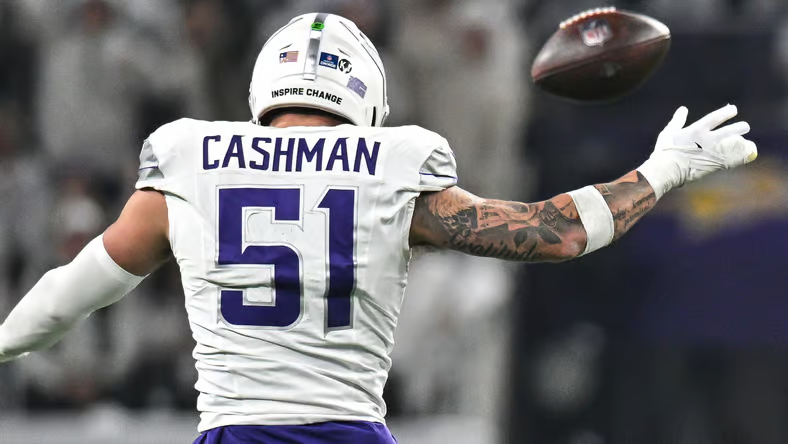
The Blake Cashman trade chatter did the rounds this week, and I’m not buying it as a serious Vikings plan. You can see how the article gets written: Cashman isn’t a cheap rookie, Jake Golday has arrived, Eric Wilson is back, Ivan Pace Jr. is still in the room, Flores uses safeties and linebackers in overlapping ways, and if you add a cap number plus Dallas, you have instant off-season trade content.
The problem is pretty clear. Cashman is still the defensive communicator and one of the more reliable players in the front seven, so trading him just because the group is more interesting now feels like getting excited about a neat spreadsheet and forgetting someone still has to call the defense.
The real point is that linebacker isn’t a quiet group anymore. Golday is the one to watch, though I’d be careful about moving him to edge just because the Vikings need pass rush. His best path is at linebacker: overhang, coverage, blitzing from depth and eventually some of the unique Flores roles that confuse offenses. Wilson brings experience and pressure, Pace still has a chance if he improves and the safety numbers affect the group too. So no, I wouldn’t start by trading Cashman. I’d start by saying the linebacker room is more complicated than it was a few months ago.
Caleb Banks is moving from foot watch to job watch
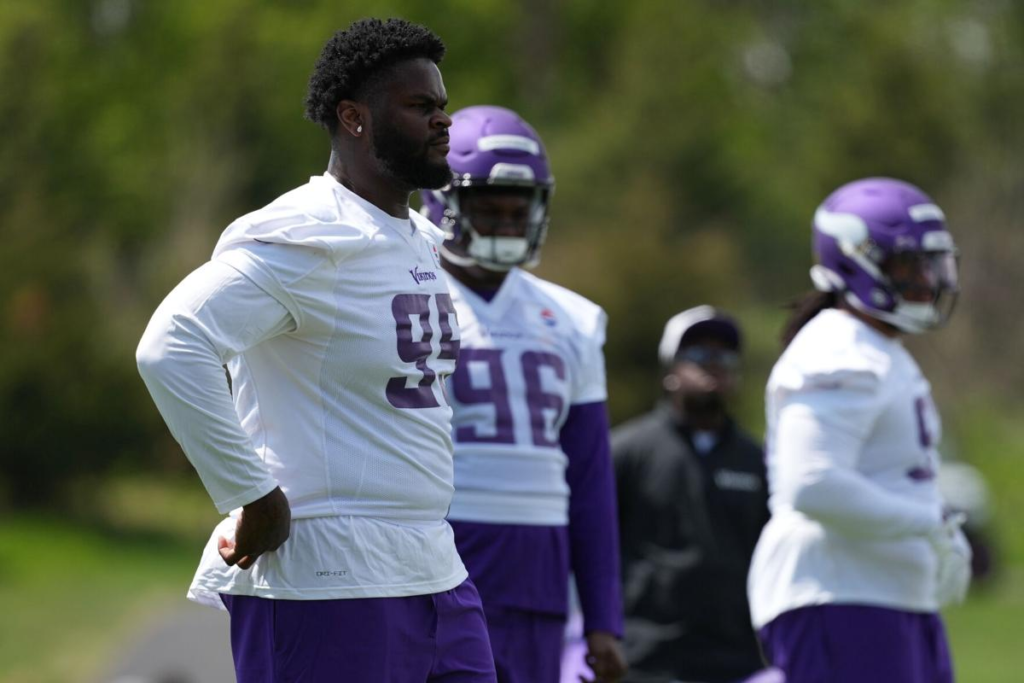
The first Caleb Banks conversation was medical, understandably so: foot injury, cautious spring plan, training camp as the real target. All perfectly sensible and probably still the right way to handle him. This week nudged the conversation on, because the Vikings put out their film breakdown of Banks while the draft-night trade-down context carried on bubbling in the background.
Minnesota was willing to trade back at No. 18, but the offers didn’t work out, so Banks was the pick. Now the question is less about his health and more about the job waiting for him when he’s ready. Banks carries a lot of weight for a rookie defensive tackle: he’s a first-rounder, picked when extra selections would have helped, and part of the effort to rebuild the front after moving on from veterans and trading Greenard.
He’s also a Flores gamble: size, movement, disruption and the hope that this role brings out more than his college stats showed. If Banks succeeds, the defensive rebuild looks much stronger. If he’s delayed or just average, the whole plan feels shakier. There’s no need to panic yet, but the job ahead of him is not to be underestimated.
The Flores legal update needs care
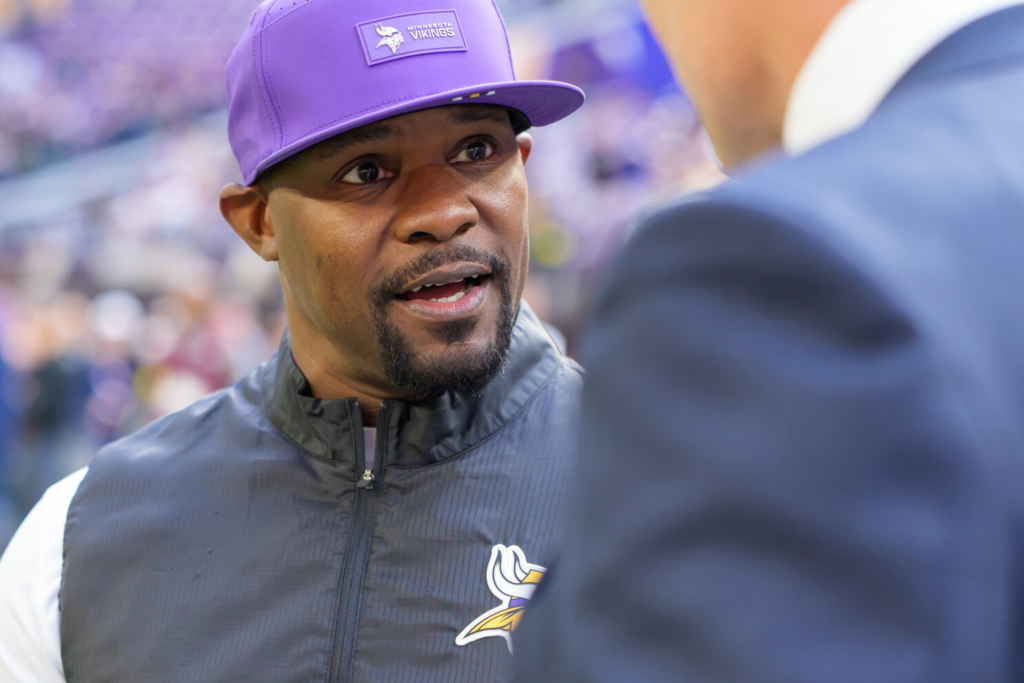
The Supreme Court declined to hear the NFL’s appeal in Brian Flores’ discrimination lawsuit, which means the remaining claims can continue in open court rather than being pushed back into league arbitration. It’s a major legal development, and it deserves more care than the usual football habit of asking whether everything is a distraction.
Flores’ case is about hiring practices, race, access and power in the NFL. Reducing it to whether it affects third down would be grim, frankly. For the Vikings, the football position hasn’t changed: Flores is still the defensive coordinator, Minnesota has kept adding players who fit his world and the 2026 defense still leans heavily on his ability to make a younger, reshaped group work.
The less obvious Vikings angle is continuity. If the lawsuit stays public and head-coaching jobs remain complicated, the Vikings might keep Flores longer than most coordinators with his profile. I’m not predicting that and it’s not the main legal story, but it’s a football thread worth noting.
A few more Scroll notes
The GM search moved into the finalist stage, with Rob Brzezinski, Reed Burckhardt, Terrance Gray, John McKay and Nolan Teasley forming the public group, and the search firm being referenced around the process is TurnkeyZRG. I’m deliberately not giving it a full section this week, because the Scroll has already had two proper runs at the authority and structure question. Until the hire lands, there isn’t loads new to say: Brzezinski remains the internal yardstick, the outside candidates need to bring something Minnesota doesn’t already have, and the next GM will be judged on whether he can own hard calls inside a building where O’Connell, Flores, ownership and the existing football staff already carry weight.
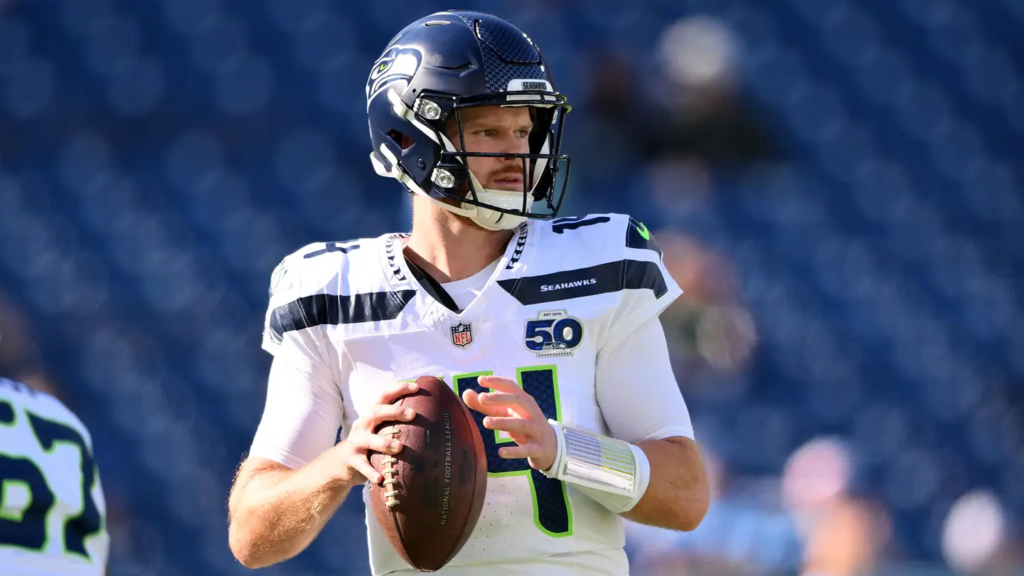
Sam Darnold popped back into the conversation by saying he understood why Minnesota would choose a younger quarterback on a rookie deal if the team believed in McCarthy, and that he still thinks McCarthy can become a good NFL player. It doesn’t change the QB room, but it does add useful context, because the McCarthy argument was always partly about contract value and patience. Hearing the former bridge starter say it out loud is interesting, even if it’s not decisive.
The outside off-season grades remind us that Minnesota is still tough to judge from afar. A middle grade makes sense if you’re unsure about Murray’s reset, McCarthy’s growth, Turner’s progress, Banks’ health, Orange’s role, Jennings’ fit and whether Flores can keep the defense together. This off-season isn’t a finished Victoria sponge – it’s more like a pile of ingredients. It could turn out great, or it could be one of those cakes where everyone just says it’s “interesting” and grabs a rich tea biscuit instead.
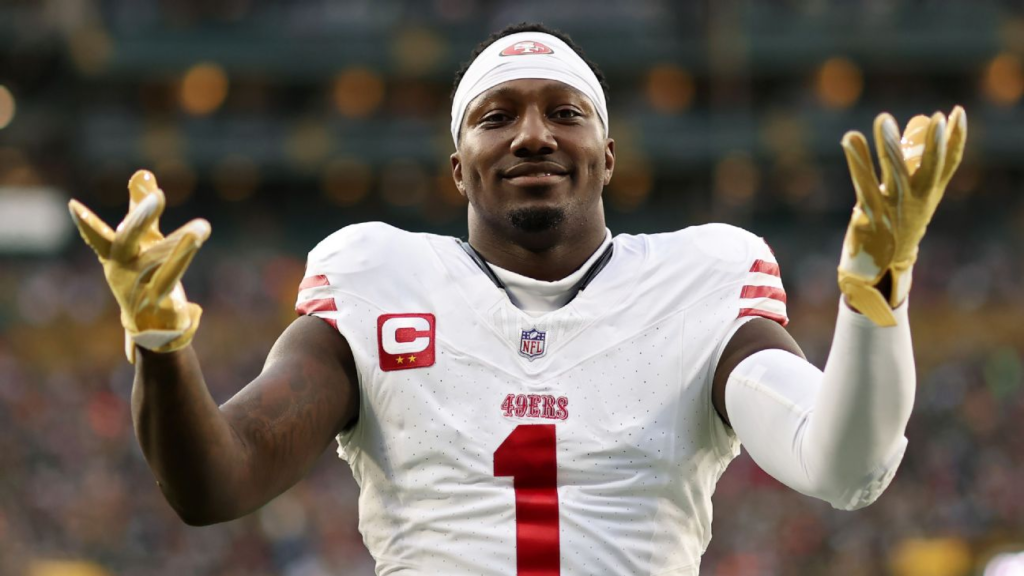
The Deebo Samuel and Xavier Hutchinson receiver ideas are fun but unlikely. After Jennings, any new receiver has to be affordable, clearly useful and better than the players already fighting for spots at the bottom of the group; otherwise, it’s just collecting names instead of filling real roles. The Anthony Richardson and Brendan Sorsby talk is even less likely, since the Vikings already have Murray, McCarthy, Carson Wentz and Max Brosmer. Pretending they need another quarterback story this week just sounds like asking for a headache.
The Packers and Josh Jacobs situation should be watched closely, not turned into rivalry talk before there’s any real football news. It only matters for the Vikings if it affects player availability or Green Bay’s Week 1 prep. Until then, I’d personally skip the cheap shots. The community stories deserve a mention too: rookies visiting Children’s Hospital patients and the Vikings/U.S. Bank work with local elementary students won’t get as much attention as OTA clips, but they’re still part of the week. A club is more than just its depth chart, even if we sometimes forget that.
The Scroll for this week
This week felt like the off-season moved a little closer to real football and away from just arguments on paper. The Vikings still haven’t hired a GM, picked a quarterback, settled Harrison Smith’s future, proven the Turner gamble, put Banks on the field or shown if offensive line drills will pay off on Sundays. There’s still a lot up in the air and anyone saying otherwise is probably just selling a camp story before camp even starts.
What’s changed is the kind of questions we’re asking. They’re now more about what happens on the field: language, timing, footwork, body position, roles, trust and whether the Vikings can turn a busy spring into something that works. Nothing is solved or dramatic yet, but it feels a bit more real than it did a week ago.